
Go to Church
A crash course in why attendance and membership counts.

Note from the author: I generally try to exhaustively substantiate whatever I write when the topic is theology, following from the purpose of this publication. This piece is not intended as an exhaustive theological proof, but rather something like an informed opinion-piece. Accordingly, I have not doubled or tripled its length with exhaustive citations and explanations. If any of my readers would like to delve deeper into the scriptural, confessional and Church-historical roots for any of the statements below, please feel free to reach out to me or leave a comment, as these questions can serve as a basis for future articles.
As we progress further into the new year we find many of the same themes carried over from the last — most people still think that something big is wrong with the world today. People find different channels to express this concern: politics, aesthetics, philosophy, etc. For the Church, the idea that something is wrong with the world is nothing new. Of course, she has had her periods of complacency where all seemed to be right with the world, and accordingly took a backseat, facilitating role in the organization of social order and progress. But given the now long-ongoing trend of trepidation over the future, she is returning to her roots of being at odds with the powers of this world — physical and spiritual — as new believers flock to those organs of the Church who preach the world’s depravity full-throatedly. Yet many of those new believers drawn to the Church that Christ founded, a body both visible and invisible that transcends denominational boundaries, are for some reason not ready to take the step of joining a congregation and living their faith out with other Christians. This article will cover the basics of the Christian congregation and why believers should strive to move their faith out of isolation and into a congregation; or to put it another way, off Substack, YouTube, X or Facebook and into a church.
Faith then and now

“And stretching out his hand toward his disciples, he said, ‘Here are my mother and my brothers!’”
Matthew 12:46-50
What is the greatest problem of our time? Is it government corruption? Is it an evil cabal of elites that run the world behind the scenes through ever-more sophisticated instruments of control and surveillance? If we can’t relate to these, we certainly have a pet theory as to why the world is going astray, and most of these can all find their root in some manifestation of the problem of evil. Even the staunchest philosophical relativist will find a group or idea which they regard, even if in all but name, as evil. This author would contend that the problem of evil, even as it’s now powered by greater technology than ever before, can hardly be called timely. Of course, people in the west are reawakening to the problem after a long period of optimism, but while it might for that reason seem timely, the problem never went away, it was only ignored and spun in different ways that made it seem unthreatening, perhaps even trivial — something that would be dealt with in time by better organization and greater moral striving. Being that evil in any expression is not a problem of our time, but something with us since the first days of humans’ existence, we have to look at something a bit more specific: a unique disarmament of man in striving against evil. In a way we have already identified the cause: misplaced optimism, faith in our collective means to deal with evil, relativization of evil, etc. Most particularly we can identify that we fail to see the evil in ourselves, which is evident in how our societies revile the idea that we might be sinners in need of repentance, conversion and forgiveness. Even more particularly, and perhaps most pressingly, we can name the cause of our disarmament as disorganization in our resistance to evil, isolated from others who would fight alongside us to preserve at least our own survival.
In our time, enabled by the unprecedented availability of distractions in the form of entertainment media — much of which is ever more rapidly degenerating into Orwell’s “two minutes hate” by the day — we find ourselves ever more isolated and seemingly satisfied with ourselves and what we have built up around us, even as we observe the onslaught of emptiness and decay in the world around us. The underlying cause of this fragmentation and isolation of human community is not a new phenomenon, but something that our societies have been progressing towards for centuries, particularly among urban families: we have seen our “social units” shrink from large households defined by more than blood, to large extended blood-related families living in one place, to “nuclear” families of parents and children (where the grandparents may have an intermittent presence from a distance), to where we stand now — individuals and their partners, if they even have one or choose to live with one monogamously. The nuclear families are, generally at a rate of at least 30-50% in the west, broken up by divorce, and many children migrate from parent-to-parent on a rotating basis. Even in these small family units people are isolated, separated from their family and peers by differing generational mentalities, aesthetic preferences and political divides. Increasingly, people want to be alone, even when they are with others: this is how individualism manifests. When the postmodern person finds themselves confronted with the reality of the world’s depravity, they may find ample support for one explanation or another, perhaps even Holy Scripture’s explanation, and embrace it. In present day, however, the most common instinct is to file away the truth and continue on in isolation; it’s not immediately clear to many why they need to do anything more than know the truth and hold it personally (or just post about it online in a simulation of community) as they go about their life.
In present day, however, the most common instinct is to file away the truth and continue on in isolation; it’s not immediately clear to many why they need to do anything more than know the truth and hold it personally (or just post about it online in a simulation of community) as they go about their life.
The Church has always rejected this kind of isolated faith from the beginning. Christians gathered in communities — often small — from the time when the disciples walked with the Lord Jesus Christ. For Christians, it has never been enough to simply hold faith privately and continue living as if everything was the same as before they held faith in the death and resurrection of God here on earth. We know from by the example of Christ’s own ministry as recorded in the gospels, and particularly from St. Paul’s letters to the early Christian congregations, that the Church has been an institution with physical gatherings and hierarchies from day one. In 1 Corinthians we read about the congregation in Corinth gathering for the Lord’s Supper. Across the epistles and particularly in 1 Timothy we read of the offices of overseer (ἐπίσκοπος — episkopos), elder (πρεσβύτερος — presbyteros), and servant (διάκονος — diakonos), which any historic denomination considers divinely instituted. We even read of global organization in St. Paul’s letters, as he he beseeches the congregations he addresses to contribute alms for a famine-stricken Jerusalem.
The Church, and particularly the congregation has always been a social unit, intended as such by Christ and the apostles. Not only is it intended as a social unit, but the highest association for the Christian, extending our human blood relations we trace back to Adam with the blood of Christ that calls us into the “household of God” [1 Timothy 3:15]. In Lutheran thought, this does not dissolve our family bonds and responsibilities — quite to the contrary — but it does mean that Christian fellowship is essential and meant to be much deeper than friendship and even deeper than our blood relations. Indeed, the family related by blood is meant — by God — to exist wholly within God’s own household, something reflected in the apostles baptizing whole households — including children and infants — where possible. At any rate, it is simply out of line with how the first Christians practiced their faith to live out one’s faith in isolation, or to live their lives as sojourners through many denominations and congregations as if the divine service was some culinary curiosity, unless of course necessity has pressed the Christian to move routinely from place-to-place (which raises the question of whether this is ideal in the long term, if at all avoidable). But the purpose of this article is not to rebuke isolated believers for not doing things the way they ought to be done, but rather to start with the basics: what a congregation is, what it does for the believer, and what the believer contributes to the congregation.
What is a congregation?
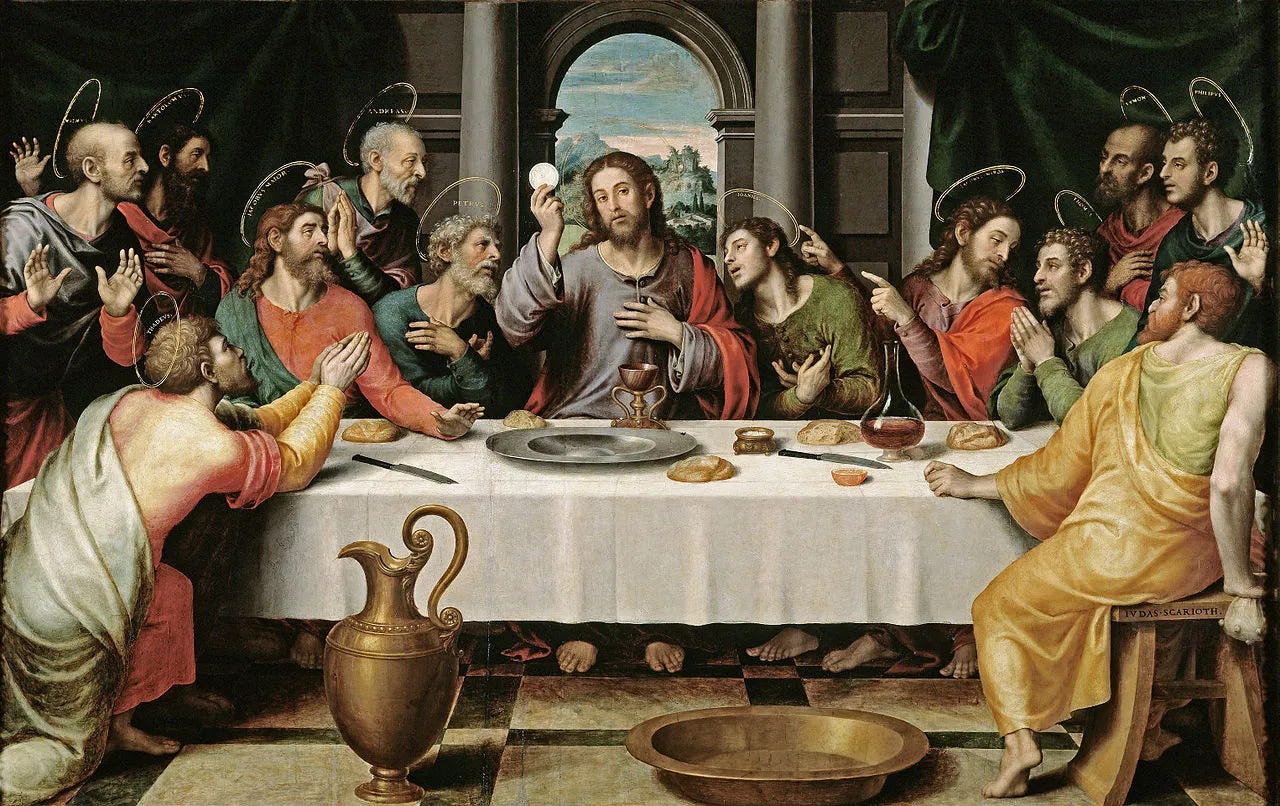
“For where two or three are gathered in my name, there am I among them.”
Matthew 18:20
Let us imagine a picture: the year is 1580 and we are in Venice. German traders have business here, and often come and go from this city of trade and industry for long periods of their career. These Germans have been raised in the faith of the Lutheran Reformation, maybe some of them are even from Saxony, the heartland of that Reformation. How should these men — and perhaps their families who rent homes in the German district of Venice — go about worship? Do they move it into their homes? No — on the third floor of a warehouse in their district called the Fondaco dei Tedeschi, in the midst of a city deeply under the rule of an ecclesial regime who would punish their confession by pain of death, they gather around the altar in secret to worship God according to their heartfelt confession. A pastor is called either from among them or from abroad, the Word is preached, the Sacraments are administered. Among the families who live transiently in Venice, babies are born, and they are baptized into the community that gathers in that secret place. The men, women and sometimes children who gather here — sometimes only few — are a Christian congregation.
The words of the gospel of Matthew that lead this section are the basic biblical criteria for a congregation. Article VII. of the Augsburg Confession states that “The Church is the congregation of saints in which the Gospel is rightly taught and the Sacraments are rightly administered.” and does not explicitly evoke Matthew 18:20, but a confessional/historic and biblical reading together tell us this: the Church exists where not one, but two or three are gathered around Word and Sacrament — this physical gathering of at least two or three is the congregation. The Church is wherever these gatherings are because Christ is present there by His own promise and institution; the Church catholic encompasses all these congregations of the saints. There is a divide here between the Lutheran and Roman/Eastern readings: the latter church bodies would identify the Church as existing where a bishop or at least a priest ordained by the sacrament of Holy Orders exists, and as such private masses, or even self-administration of the Eucharist have happened historically. The Lutheran view, in line with what we see occurring in Holy Scripture, excludes this practice, and the proclamation (this is something different from teaching or reading — more on this later) of the Word and the administration of and participation in the Sacraments of Baptism and the Lord’s Supper are made communal events. To put it simply: Christ and His gifts are present among a community of believers. All the same, the size of the community required for these activities of the Church is, by biblical prescription, no greater than “two or three.”
…the Church exists where not one, but two or three are gathered around Word and Sacrament — this physical gathering of at least two or three is the congregation.
It would be absurd to say, however, that any Christian practice — even the most zealous reconstructionist neo-protestantism — exists without precedent: all of the practical life of the Church is defined by what we have seen from our forebears, whether that practice is shaped by acceptance or rejection of that precedent. It is likely that very few readers will be able to conjure up an authentic precedent where the whole life of the Church (preaching, Baptism, Confession and Absolution, Eucharist) exists among three people. This is because the Church is meant to be expanding in all times and places. Not only are Christians called to gather to “preach the word” [2 Timothy 4:2], or to “take and eat” the body and blood of Christ in the Sacrament of the Altar [1 Corinthians 11:24] but also to “go and make disciples of all nations, baptizing them in the name of the Father and of the Son and of the Holy Spirit…” [Matthew 28:19-20] Not only does the congregation partake in the gifts of God, but they are also called to bear witness to Christ and to bring others to partake. This serves as the driving force behind the eventual expansion of congregations, and the reason why we do not have many living examples of congregations of two or three.
Most of the history of the Church played out in societies where families ended up in church together, making it rare that mission activities grew congregations individual-by-individual, growing instead family-by-family. Once everyone in a given settlement has a congregation (a situation nobody in our time should pretend we live in) — or perhaps in a situation like the one described above where worship happens in secret — individual congregations can only expand one way: as newborns in the family are brought to the font of Baptism. Even in the history of established protestant denominations and their member congregations, the diversity of the congregations that physical churches were built for may be deceptive to the modern viewer: a Church founded to house fifty to one hundred members may have only housed multiple generations of four to five families. In the territory of the Kingdom of Hungary, for example, such cases usually arose out of necessity, building a church to meet the needs of quite a small and isolated group of believers who had recently migrated into a territory where their confession was not represented, something of a reflection of the gathering of two-to-three on a realistic scale for the time.
…every congregation is called to mission. Not only does the congregation partake in the gifts of God, but they are also called to bear witness to Christ.
The medieval world before the Reformation reflected a very different reality: churches were built to house all of the members of a given settlement, with the understanding that all of these constituents belonged to the visible institution that governed ecclesial activities in that area. Before anyone entertains the thought that the Reformation “ruined” that state of affairs, there was only a short period in the history of the Church where the churches of the Reformation had to return to a “state of emergency” wherein congregations had to be small and work outside of the “official” ecclesiastic hierarchy, as the principle of cuius regio, eius religio (whose realm, his religion) came into effect with the 1555 Peace of Augsburg and returned the Church in regions with a clearly defined majority denomination to something resembling the previously mentioned medieval norm (until this very day). In truth, as postmodern people in all reality, we should ask whether such a practice is truly good or even workable in our time. Even as Confessional Lutherans, grounded firmly in Scripture, Confession, and historic Christian orthodoxy, we recognize that true faith cannot be coerced or reflexive on the basis of rote tradition. For Lutherans, the organic organization of a congregation of believers is itself established by Scripture, Confession and precedent together, and reflects the very formation of the early Church: regular people hear the Word of God proclaimed; they hear the Gospel, hear the need to gather under leadership, hear the call to mission, and so they congregate in a place for worship and proceed to the next essential step that makes the full spread of the Church’s activities possible: call a pastor to lead them.
Who is a pastor and what does he do?
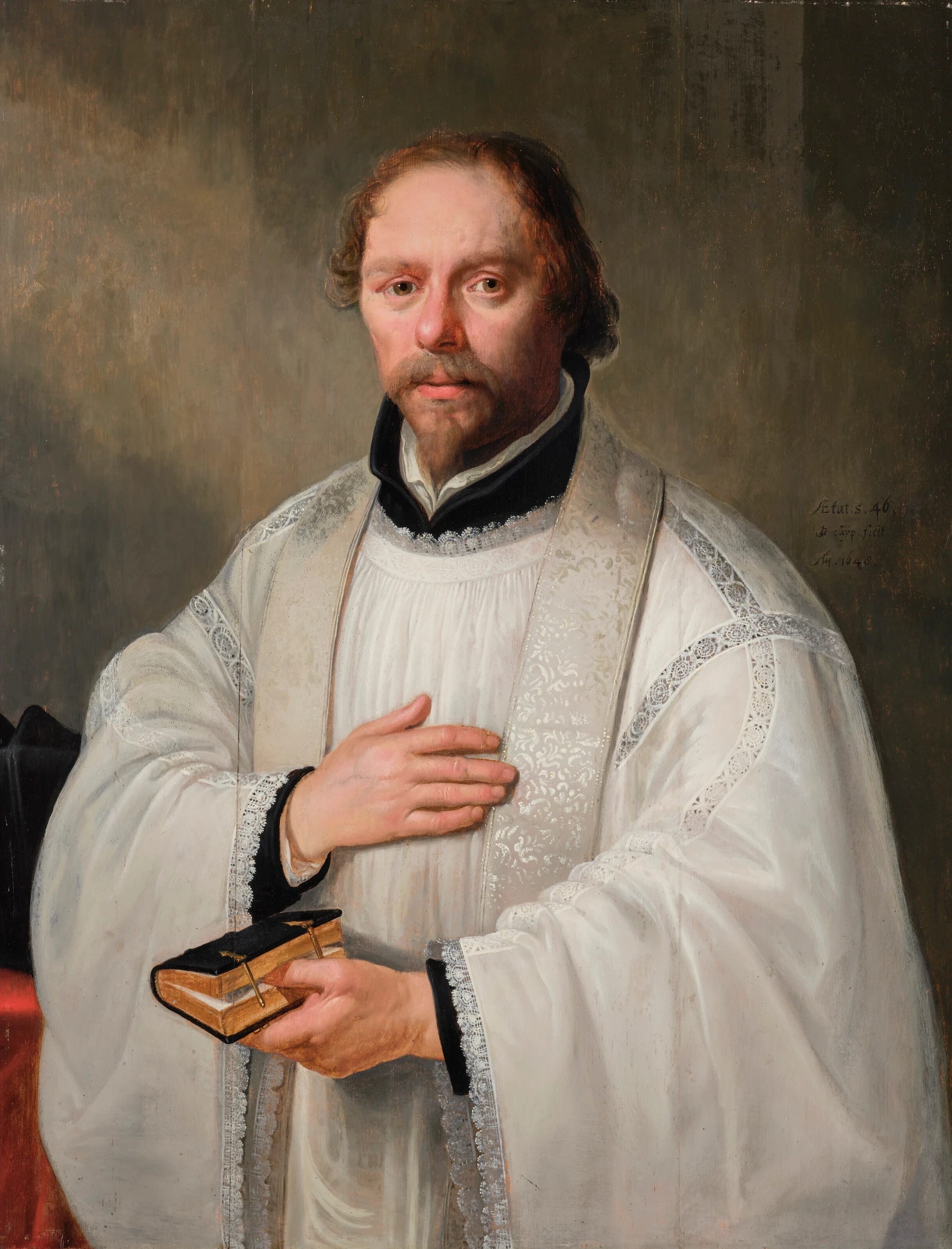
“Truly, I say to you, whatever you bind on earth shall be bound in heaven, and whatever you loose on earth shall be loosed in heaven.”
Matthew 18:18
Every congregation, and indeed the whole Church, has only one head: Christ. All the same, Scripture itself both prescribes and describes leadership roles in the Church. The apostles are perhaps the greatest example of what is in fact a leadership role in the Church: they held particular authority, as eyewitnesses of Christ, in proclaiming the Gospel and in steering congregations away from heresy towards sound doctrine. As apostles they both carried out and ordained others to the office of overseer (ἐπίσκοπος) in the churches they planted. Today this office is most frequently called the office of bishop.
The particular institution of the bishop is most often defended with reference to the letters of St. Ignatius of Antioch from the early 2nd century. St. Ignatius is held by tradition to have known St. John the apostle and evangelist personally, and as such it’s wise to assign weight to his writings. Even if he didn’t know St. John personally, St. Ignatius’s life and Christian formation occurred firmly within the apostolic period, where firsthand witnesses to the Lord Jesus Christ were preaching and teaching in the Church. One often overlooked bit of Church history, however, is that what we translate in St. Ignatius’s letters as “bishop” was not the office that is present in the later Church — a shepherd over shepherds, or a priest over priests with a seat over many congregations. In the beginning, each Christian congregation was presided over by one bishop in the biblical sense that St. Ignatius understands it (the office of overseer), and only later, with the revolution of the Edict of Thessalonica and the reorganization of a growing Church, did the title of “bishop” come to eventually exclusively represent what we think of today.
As the Reformation churches were forced to call pastors without the involvement of a bishop according to the medieval definition of the office, the office of the overseer was also forced to return to its biblical and early-Church roots. The reformers returned to the examples of congregational calling we have detailed from Holy Scripture above. As such, the office of the overseer became increasingly reflected in what we now call the office of “pastor1,” while what was previously called the office of “bishop,” began to be known as the office of “superintendent” in the churches of the Lutheran reformation. Some Church polities of the Reformation never broke with either traditional apostolic succession or the episcopate, but these were the exception rather than the norm, and certainly cannot be considered a requirement for good Church order from the words of Scripture alone, or even if we honestly consider the letters of St. Ignatius. It may, at best, be regarded as a nice-to-have, as long as it does not cause more trouble than it’s worth.
Every congregation, and indeed the whole Church, has only one head: Christ. All the same, Scripture itself both prescribes and describes leadership roles in the Church.
Regardless of nomenclature, Scripture lays out concrete qualifications for this office:
…an overseer must be above reproach, the husband of one wife, sober-minded, self-controlled, respectable, hospitable, able to teach, not a drunkard, not violent but gentle, not quarrelsome, not a lover of money. He must manage his own household well, with all dignity keeping his children submissive, for if someone does not know how to manage his own household, how will he care for God's church? He must not be a recent convert, or he may become puffed up with conceit and fall into the condemnation of the devil. Moreover, he must be well thought of by outsiders, so that he may not fall into disgrace, into a snare of the devil.
1 Timothy 3:2-7
Traditional denominations rightly regard this office as divinely ordained because the office itself is already in place in the texts we refer to as witness to Christ Himself. But how can we resolve the seeming discord between Christ as the head of the congregation and the Church, and a man appointed, in some capacity, as a head? St. Ignatius writes of the overseer:
Now the more any one sees the bishop keeping silence, the more ought he to revere him. For we ought to receive every one whom the Master of the house sends to be over His household, as we would do Him that sent him. It is manifest, therefore, that we should look upon the bishop even as we would upon the Lord Himself.
St. Ignatius’s Epistle to the Ephesians
There are two interesting facets to this exhortation; we will start with the second and come back around to the first. St. Ignatius writes to the congregation at Ephesus that “we should look upon the bishop even as we would upon the Lord Himself.” This indicates a “downward” extension of Christ’s own teaching: “Whoever believes in me, believes not in me but in him who sent me. And whoever sees me sees him who sent me.” This is not to be equated with Christ’s union with the Father and the Holy Spirit as three persons of the Holy Trinity, but rather in a different way. The Church has always ascribed to priests or pastors the privilege and burden of acting in persona Christi2; that is to say: in the person of Christ. The Latin phrase itself seems to come from St. Augustine, and is carried into the scholastic era by St. Thomas Aquinas. The Lutheran Confessions only implicitly extend the idea to Lutheran ministry, though Confessional bodies certainly teach it as our inheritance, even if not by its Latin name3. But the idea itself goes all the way back to the apostolic age, as St. Paul writes to the Corinthians: “…if I have forgiven anything, has been for your sake in the presence4 of Christ.”
Regardless of how deeply we wish to embrace the particular Latin phrase that signifies the concept, the concept itself is at the heart of why the Lutheran, Roman and Eastern churches only permit the priest/pastor to perform Baptism, consecration of the Eucharist and Confession and Absolution: these men have been properly called, vetted and ordained for the role of representing Christ to the congregation. In this way no man is placed at the head of a congregation with authority of his own, only the authority that is Christ’s. This is why St. Ignatius’s other comment is so interesting: “Now the more any one sees the bishop keeping silence, the more ought he to revere him.” The job of the overseer/priest/pastor is not to speak in Christ’s place as a man, but to proclaim Christ’s Word to the congregation. The teaching and instruction incumbent in the Word is not the pastor’s, and the pastor’s goal in the divine service is not teaching and instruction, but rather proclamation or manifestation. Indeed, the sacraments too are only efficacious because of the Word of God which the pastor pronounces over the elements, and so when the pastor is understood as silent, we should understand this as meaning “silent but for the Word of Christ Himself.” It is by acting as a conduit for the Word that the overseer/priest/pastor becomes deserving of reverence begetting the “Lord Himself.” When the pastor is doing his job, Christ is among us by the clear and faithful proclamation of His Word.
The Church has always ascribed to priests or pastors the privilege and burden of acting in persona Christi; that is to say: in the person of Christ.
Of course, we cannot ignore that bishops, priests, and pastors across all denominations of the Church are burdened with the responsibility of exercising their own judgment in writing sermons to enliven the Word and providing pastoral care to their congregants. The pastor is steward to his congregation by God’s command as Adam was steward to the earth, creating an obviously fallible situation. This is why pastors are formed by participation in seminary, and why for good order they must be accountable to peers and superiors. The neo-protestant “pastor” who sees himself as just another member of the flock who happens to have the appointed job of leading worship is ignoring the divine institution and nature of his role. Not only that, but he is also ignoring the fact that this role was instituted in this form because human beings will always look for tangible headship in any social arrangement. Embracing the office as it was instituted is not to the glory of the pastor, but as a safeguard against his own fallibility and the general fallibility of human beings. St. Ignatius’s note that it is the “silent” pastor who deserves the due reverence of his office also cautions the believer to themselves remain firmly rooted in the Word of God and present questions regarding the faith, instead of blindly trusting any human or institution — how else can we know whether the pastor is conveying the Word of God or his own prerogative?
The congregation has never been expected to follow blindly: Christ’s own revelation is tangible, His light visible and His words and acts are clear as recorded in Holy Scripture, as surely as St. John the evangelist routinely tells us to walk in light rather than in darkness. Indeed, the appointment of a pastor is not something that can be forced on a congregation by a bishop or superintendent, any more than the apostles forced (or could force) the early churches they served to accept them. No, the pastor is called by the congregation and ordained by his peers to ministry as a confirmation of that call. We receive this doctrine of pastoral calling directly from the Bible: the first overseers were appointed by Christ as the twelve apostles, but after Christ’s ascension into heaven, a new process is observed for the selection of overseers, both of which we see in Acts of the Apostles. In the first occurrence of such a pastor appointment in the book of Acts, a new overseer of the Church must be chosen to replace the traitor Judas Iscariot. In Acts 1:12-26 we see in detail that the apostles did not unilaterally appoint Judas’s successor, but rather had the believers gathered with them (about 120 in number) cast lots between two candidates that they had vetted. In Acts 14, we see that the appointment of elders (presbyters) for the churches of Lystra, Iconium, and Antioch is carried out by votes (χειροτονέω - cheirotoneó - in the original Greek, meaning election or choosing by raising of hands) held in those congregations. We see from this Biblical precedent an office that is divinely instituted and a calling to that office which is from the congregation. Any informed reader from the Roman or Eastern churches will of course decry this doctrine as heresy, and this is indeed not the consensus that had evolved in the Church up until the eve of the Reformation, but it is by tragic necessity that the extent of the ecclesial hierarchy’s mandate needed to be reviewed — carefully and tenderly — against Holy Scripture and Church history in order to ensure that ecclesial institutions served rather than obstructed Christian faith and faithfulness to the Word of God.
… the appointment of a pastor is not something that can be forced on a congregation by a bishop or superintendent, any more than the apostles forced (or could force) the early churches they served to accept them. No, the pastor is called by the congregation and ordained by his peers to ministry as a confirmation of that call.
As we have dealt thoroughly enough (for the purposes of this article) with what a pastor is and how he is called, let us look briefly at what he is not. A pastor is a shepherd for his congregation; in churches truly accepting that faith alone justifies the faithful before God, this means that the pastor is not a jurist who uses his authority to coerce righteous living, but rather a steward of the faith of his congregation. The pastor carries out this role through several activities5: first and foremost, administering the Sacraments which God instituted for the forgiveness of sins and to sustain faith in the believer; second, writing sermons to manifest readings from Scripture according to the needs and struggles of the congregation; third, providing pastoral care and guidance to the congregation when congregants have particular struggles that must be addressed; fourth, exercising the ban — or excommunication — when it is necessary. The Lord Christ is instituting both the first and fourth functions in the quote from the Gospel of Matthew which leads this section, “whatever you bind on earth shall be bound in heaven, and whatever you loose on earth shall be loosed in heaven” [Matthew 18:18]. to “loose” is to pronounce the forgiveness of sins in Word and Sacrament, and to “bind” is to cut the believer off from this pronouncement.
…the pastor is not a jurist who uses his authority to coerce righteous living, but rather a steward of the faith of his congregation.
Excommunication is not a weapon to force a believer to live a righteous life; “For I came not to call the righteous, but sinners.” [Matthew 9:13]. Excommunication only exists to serve the faith of the excommunicant and of the congregation: for the excommunicant, the strongest possible measure to tell those believers living in open and unrepentant sin that the Lord demands repentance and — crucially — offers forgiveness of sins; for the congregation, to keep them rooted in the same life of repentance and show them that God is merciful while remaining just, forgiving all sin for the repentant. Sadly, this understanding is not shared in many Christian denominations and congregations. Either the pastor is too reluctant to employ the ban or too liberal with it. The pejorative stereotype regarding Christian communal life, however, tends to emphasize the latter, precisely because of a tendency in the Pietistic or rigorously legalist churches of yore or the neo-protestant denominations of today to view the pastor as strictly a teacher or jurist. This is not, however, the essence of Christian faith or the pastoral office, and new believers in need of a congregation should not be harried by fear of this behavior, but rather seek loving and faithful Christian fellowship and politely raise concerns if the issue arises.
What does church do for me?
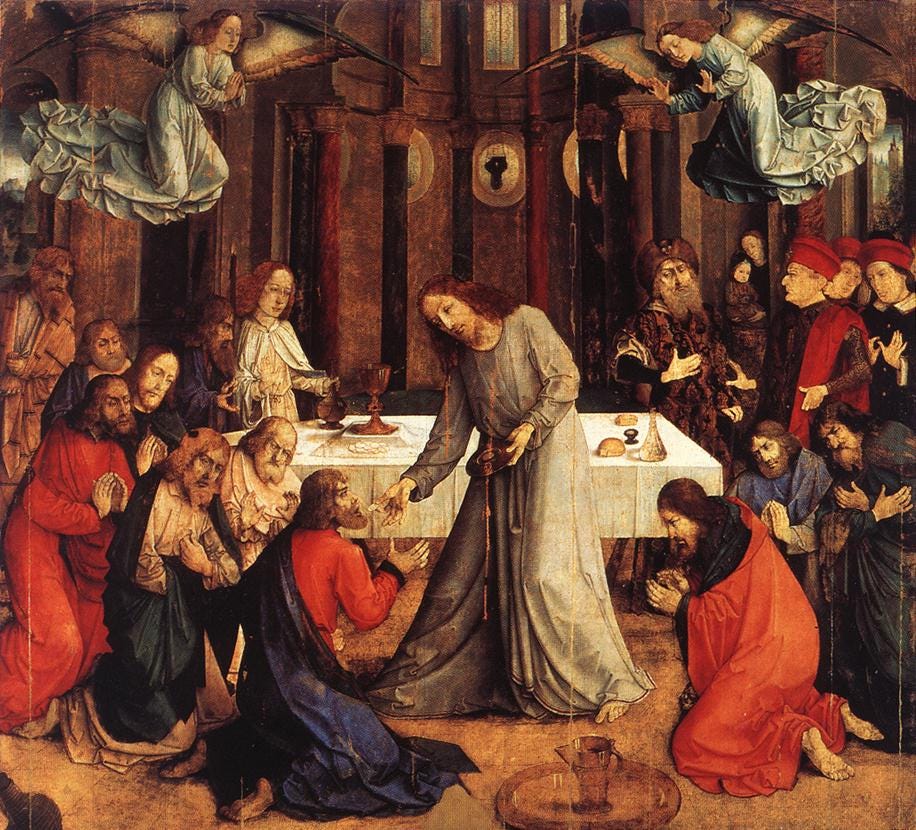
The Spirit and the Bride say, “Come.” And let the one who hears say, “Come.” And let the one who is thirsty come; let the one who desires take the water of life without price.
Revelation 22:17
The “Bride,” or the “wife of the Lamb” [Revelation 21:9] in the Revelation to St. John is none other than the Church founded by Jesus Christ. The language of bride and bridegroom is found several times in this book alone, but also elsewhere in the New and Old Testaments. The prophet Isaiah, for instance, writes to the people of Israel:
For your Maker is your husband,
the Lord of hosts is his name;
and the Holy One of Israel is your Redeemer,
the God of the whole earth he is called.
For the Lord has called you
like a wife deserted and grieved in spirit,
like a wife of youth when she is cast off,
says your God.Isaiah 54:5-6
So prevalent is this imagery that the Church has since her inception understood the Song of Solomon, a book of the Old Testament depicting a loving serenade between newlyweds that often makes more puritanical Christians uncomfortable, to reflect the love of the Lord Jesus Christ for His Church. Here in St. John’s Revelation we receive beautiful imagery of what participation in the life of the Church is for the faithful: the Holy Spirit of God and the Church calling believers to come to the font of life and drink of its waters. To the Lutheran ear the image of water reminds us of an inscription that Dr. Martin Luther famously carried with him throughout his whole life: “I am baptized.” Dr. Luther notably does not refer to his Baptism in the past tense, though he was baptized as an infant. Instead, in his mind, all the fruits of a life of participation in the Church’s gifts, the stream of water flowing from its source in Baptism. In this way Baptism is a very real and ongoing gift that the believer can relate to every day through their participation in the celebrations of the Church. With this in mind, we can see what St. John is envisioning here: the Spirit and the Church offering a stream of gifts to those who thirst for them.
Here in St. John’s Revelation we receive beautiful imagery of what participation in the life of the Church is for the faithful: the Holy Spirit of God and the Church calling believers to come to the font of life and drink of its waters.
These gifts are not offered to the believer in a vacuum, they come in response to a problem: sin and the onslaught of the devil. This mention of the Bride comes at the end of St. John’s Revelation, where previously she had been mentioned so6:
And a great sign appeared in heaven: a woman clothed with the sun, with the moon under her feet, and on her head a crown of twelve stars. She was pregnant and was crying out in birth pains and the agony of giving birth. And another sign appeared in heaven: behold, a great red dragon, with seven heads and ten horns, and on his heads seven diadems. His tail swept down a third of the stars of heaven and cast them to the earth. And the dragon stood before the woman who was about to give birth, so that when she bore her child he might devour it. She gave birth to a male child, one who is to rule all the nations with a rod of iron, but her child was caught up to God and to his throne, and the woman fled into the wilderness, where she has a place prepared by God, in which she is to be nourished for 1,260 days.
Revelation 12:1-6
What the woman is going through sounds a lot like something that has already happened: a people — an assembly — giving birth to the Lord, as the house of Abraham, Isaac, Jacob and David gave us the Lord Jesus Christ through Mary, Mother of God and scion of that house. Then the devil attacks and tries to eat the child — but the devil fails and the child is caught up into heaven to sit on His throne, and the woman flees into the wilderness. This is the time we presently live in, where the Church is in the place appointed for her in the wilderness, cared for and tended to by God in the very same wilderness the Lord Jesus Christ had to go out into for forty days to be tempted [Matthew 4]. We as members of the Church are in that very same wilderness that our Lord Jesus Christ proceeded through, enduring the assaults and temptations of the devil.
We as members of the Church are in that very same wilderness that our Lord Jesus Christ proceeded through, enduring the assaults and temptations of the devil.
It is in this context that the gifts of the Church come to us: not as a series of nice-to-have good feelings and uplifting symbols, but as necessary weapons in the spiritual struggle against sin, death and the devil. We have already touched on how the pastor is the steward of faith and exists solely as a tool to serve, a conduit to convey those gifts as instituted by the Word of God, but let us not forget that the pastor’s own calling comes from the Church as made up by her constituents — the body of the faithful — by God’s authority. Receiving these gifts depends on being in communion and living in community with the faithful who constitute the Church, if we are to receive those gifts to our preservation in grace and salvation7. St. Paul also evokes the same theme of spiritual warfare against the horrors of a wilderness under the rule of the devil in his letter to the church in Ephesus:
Finally, be strong in the Lord and in his mighty power. Put on the full armor of God, so that you can take your stand against the devil’s schemes. For our struggle is not against flesh and blood, but against the rulers, against the authorities, against the powers of this dark world and against the spiritual forces of evil in the heavenly realms. Therefore put on the full armor of God, so that when the day of evil comes, you may be able to stand your ground, and after you have done everything, to stand. Stand firm then, with the belt of truth buckled around your waist, with the breastplate of righteousness in place, and with your feet fitted with the readiness that comes from the gospel of peace. In addition to all this, take up the shield of faith, with which you can extinguish all the flaming arrows of the evil one. Take the helmet of salvation and the sword of the Spirit, which is the word of God.
And pray in the Spirit on all occasions with all kinds of prayers and requests. With this in mind, be alert and always keep on praying for all the Lord’s people.
Ephesians 6:10-18
Here the apostle emphasizes that the struggle against evil is a struggle against supernatural powers, not simply against evil men. The struggle itself begins within us, against the old self [Ephesians 4:22-24] that was crucified and buried in our Baptism [Romans 6:3-6]. All of the armor of God is theological in nature: the belt of truth which is faithful and steadfast teaching, the breastplate of righteousness which is the righteousness imputed and reinforced in the Sacraments, our feet set free to move by the exceeding promise of peace which God afforded to us by the Gospel proclaimed, the shield of faith which handed to us by the faithful pastor and his Word and Sacrament ministry, and the sword of the Spirit — the Word of God — which cuts through to the “soul and spirit, joints and marrow” [Hebrews 4:12] of the old self who seeks to drag us into the grave with him. The Church — yes, the physical gathering of the faithful here on earth, and indeed our fellow believers — is the artificer, repairing and maintaining the armor of God through her gifts, fulfilling God’s promise to the people of Israel that “He will sit as a refiner and purifier of silver, and he will purify the sons of Levi and refine them like gold and silver…” [Malachi 3:3]
The Church — yes, the physical gathering of the faithful here on earth, and indeed our fellow believers — is the artificer, repairing and maintaining the armor of God through her gifts, fulfilling God’s promise to the people of Israel that “He will sit as a refiner and purifier of silver, and he will purify the sons of Levi and refine them like gold and silver…” [Malachi 3:3]
No amount of study of Scripture or Church history, however well-intentioned or thorough, can compare to the real gifts that Christ has instituted in His Church. These gifts are all things that happen through physical means received in person: the voice of the pastor manifesting the Word of God, the water of Baptism as the Paschal blood of the Lamb, the bread and wine of the Eucharist as the true body and blood of Jesus Christ. These physical means have been instituted by God Himself to convey to us His grace and the Holy Spirit, in order to keep us from being dragged down into the grave in this life and the next. Moreover, we receive these gifts not only to our own salvation, but in order that we might support our fellow believers and carry their burdens. In fact — in trite Lutheran fashion — we may even say that the work in our salvation is already complete, and now the real work of remaining within it as we bring others to it and help to keep them in it is the real work which is upon our shoulders. It’s this crucial aspect of Christian life that we will explore in the final section of this article.
Why am I needed at church?
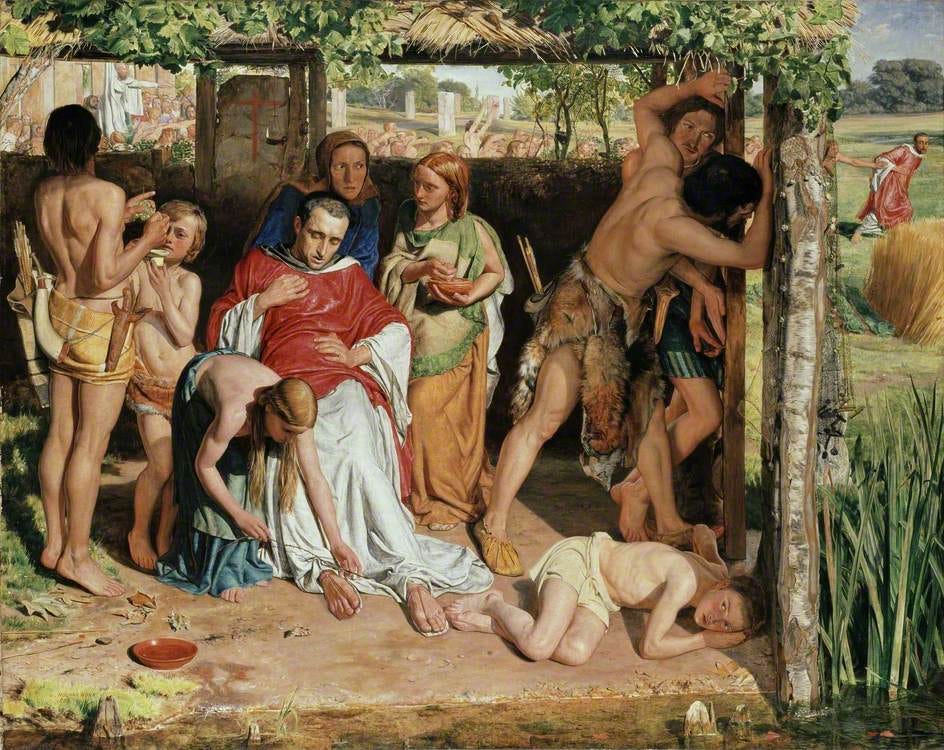
And let us consider how to stir up one another to love and good works, not neglecting to meet together, as is the habit of some, but encouraging one another, and all the more as you see the Day drawing near.
Hebrews 10:24-25
Christianity 101, first lecture: we are all sinners in need of a savior. We read the words of the moral Law, and we see that the Law proclaims us a sinner and a moral failure. If we are “protestants,” we know that there is nothing that we can possibly do to earn our righteousness before God, but rather that it is imputed to us freely through the atoning sacrifice of Jesus Christ, by grace through faith alone — the “chief article,” the heart of the Gospel. If we believe in salvation by faith and works, we ask: if my salvation is earned for me by Christ, what is left to do? What could I possibly contribute to a Christian community if my works are “rags.” This is quite the dilemma for those who are taught the doctrine of Justification diluted and out of context. In Lutheran circles there is a well-regarded distinction from Dr. Luther that helps us get to the heart of the question: “if my justification is complete in Christ through faith, what is there left to do?”
The answer is covered in the Augsburg Confession as the article on Justification and the ministry give way to the article on New Obedience, but this author contends that perhaps nothing in the theological corpus explains that answer better than Dr. Luther’s Sermon on Two Kinds of Righteousness. The gist goes as follows: the two kinds of the righteousness in the title are righteousness before God (coram deo) and righteousness before the world (coram mundo). That second category is better understood as “righteousness before our neighbor” to avoid mixing this up with “worldly righteousness,” which means something altogether different8. Righteousness coram deo is to us an alien righteousness: the work of someone else that is assigned to us because that is how the Doer intended the inheritance to be allotted in His final will and testimony. Righteousness coram mundo is our proper righteousness — something specific (or proper) to us, something we do. To put it another way, righteousness coram deo is God’s gift to us, and righteousness coram mundo is our thankful response. Our thankful response to God’s free gift is obedience to His commandments, namely the highest commandment to love one’s neighbor.
…righteousness coram deo is God’s gift to us, and righteousness coram mundo is our thankful response. Our thankful response to God’s free gift is obedience to His commandments, namely the highest commandment to love one’s neighbor.
Loving one’s neighbor is carried out in a very real way by striving to meet the demands of the moral law — as surely as “…the whole law is summed up in one word, namely this: “Love your neighbor as yourself.” [Gal 5:14] — but no man will ever meet those requirements wholly, even with the support of his household, employer and the extended household of God, or even as we are called to try wholeheartedly. Knowing this, we are exhorted to many other good works by Holy Scripture, not least of which is covered in the verse from Hebrews quoted at the beginning of this section: “stir[ring] up one another to love and good works…encouraging one another.” The apostle does not mince words: to do this you must meet with one another. More specifically: the Christian faithful must meet with one another. “Bear one another's burdens, and so fulfill the law of Christ.” [Galatians 6:2]. “Therefore, confess your sins to one another and pray for one another, that you may be healed.” [James 5:16].
These apostolic exhortations filed under the header “love your neighbor” require us to be present beside that neighbor, knowing him and understanding his physical and spiritual struggles, moving outward from our immediate, hereditary household — which we are responsible for in the vocations of father and mother, son and daughter — to our extended household, which is in a real sense the household of God to which we belong by Baptism and faith in Christ. Ideally, these realms overlap, which goes a long way to alleviate any potential conflict between the two. If one is completely isolated from family and friends, childless and unmarried — as so many are in our time — to put it bluntly, that person has no excuse at all to not devote his surplus energy to his Christian brothers in a congregation by learning their weaknesses and buffering them with whatever strengths they have to offer. Such contributions of the faithful, however big or small, are key to the endeavor of the Church: to call people to Christ through the Gospel and keep their faith strong “all the more as you see the Day drawing near.” “For as in one body we have many members, and the members do not all have the same function, so we, though many, are one body in Christ, and individually members one of another. Having gifts that differ according to the grace given to us, let us use them…” [Romans 12:5-6] The Christian is called to the task of contributing to the lives of his fellow faithful in a localized, personal way, each according to what can be offered9.
…all of the apostolic exhortations filed under the header “love your neighbor” require us to be present and beside that neighbor, moving outward from our immediate, hereditary household — which we are responsible for in the vocations of father and mother, son and daughter — to our extended household, which is in a real sense the household of God to which we belong by Baptism and faith in Christ. Ideally, these realms overlap, which goes a long way to alleviate any potential conflict between the two.
Much of the recent resurgence of interest in the Christian faith tends to follow a strange tendency to emphasize the monastic aspiration of self-denial and purported moral improvement. This is a proposition that seems to suit the isolated postmodern man better than the idea that he should reach out to a community of believers and offer whatever is within his means to support the faithful in the struggle against sin, death and the devil. But the reality of the monastic venture is that its constituents were not simply rooted in self-denial and moral rigor, but first in community. No monastic order existed in one person’s home or bedroom, even less on some social media platform in the digital aether. No monk ever subsisted in a cave alone without someone to bring him provisions. Monasticism flourished specifically because monasteries were home to many who devoted their entire life to the benefit of a community and the faith that underpinned it. Recent romantic impressions of monasticism tend to focus more on how individual monks conquer their passions and less on the community that enabled them to do that. This fits suspiciously well within the productivity-focused “grindset” mentality of the present age.
With this observation in mind, we should ask ourselves: is “conquering one’s passions” for the sake of personal holiness even the goal in personal sanctification? No commandment ever demanded man to renounce his role in his community and exit it for a life of personal improvement. To the contrary, all of the Ten Commandments and nearly all of the apostolic exhortations refer explicitly to life among others, and as Dr. Luther’s two kinds of righteousness highlight, personal improvement is to be employed to the end of helping and supporting our neighbor, and often more specifically to helping our neighbor spiritually. This is something that can only be done for brothers — there is no true spiritual aid that a Christian can offer to those who do not share their belief in the joy of the Gospel. In cases of dire necessity, feeding and clothing aliens and heathens is certainly part of being a Christian (something we should decisively distinguish from actively importing aliens and heathens to feed and clothe) — after all, loving our enemy is “heaping coals on his head” [Proverbs 25:21-22], and that fear of judgment may move those we help — despite their rage against us — to repentance and reception of the Gospel. This is far from our first obligation, however, as the most cutting apostolic exhortations refer us to supporting our brothers and shouldering the burden of keeping the faith alive in them. Perhaps it is worth offering a worldly observation that even aliens and heathens will see through the hypocrisy of those who give impersonally to the furthest from while utterly neglecting the nearest to, defeating God’s purpose in help for our enemies altogether. Christendom — what is left of it — is far too accustomed to operating from a position of strength in the world, ignoring that we are failing entirely to satisfy the basic requirements that undergird a working assembly: solidarity and mutual aid. Church is the place where brothers meet, where brothers shoulder each others’ burdens, where they stir one another to love and good works. Without attendance and membership in a congregation, Christian faith is nothing but a simulation.
In closing
The smallest element that the catholic Church is composed of is the congregation: the place where believers gather for fellowship and participation in the gifts of God that are necessary for maintaining a living faith. The congregation and the pastoral office that guides it are instituted and defined by the Word of God. The Church does not need big congregations, buildings to house them, or to “retake beauty” by suffering unfaithful ecclesial bodies as primary, secondary or even tertiary requirements of Christian fellowship — she needs constituents ready to shoulder sacrifice for one another. If all the church bodies in your area hate you, hate the Word of God, or hate the needs of you, your family or your society — or even if the dynamic of its ministry merely hampers Christian fellowship by deeply-embedded indifference — reach out to an ecclesial body that doesn’t and find out how to make a house Church and pastoral formation possible: the Word of God places no burden on believers to suffer ecclesial bodies that do not represent what God wills for His children and His creation. But do not fool yourself: there is no scenario in which the Church regains ground and enters into renewal without real, tangible congregations of the faithful gathered to support one another and to join together in receiving the living, saving aid of God’s gifts and under the guidance of His Word.
May the gracious Lord God preserve His Church by His mercy and give His faithful strength to be serve her, so that the life that flows forth from her like living water through the gifts He instituted and through His holy Gospel not cease, but remain with us always until the day we meet Him face-to-face and have the fruits of our faith revealed to us on that final day. Amen.
The title “pastor” is not something exclusive to the churches of the reformation. In the Roman church, every priest is to be considered a pastor. In the confessional Lutheran context, the distinction is not a matter of addition of new doctrine, but rather a subtraction of medieval errors by returning to the biblical doctrine of the priesthood of all believers (a doctrine affirmed in essence if not by name by many of the fathers) instituted by St. Peter in 1 Peter 2. There is a great deal of misunderstanding regarding this doctrine, with many denominations and schools of thought viewing it as a grounds for the dissolution of any real ecclesial authority. The Lutheran Reformation adopted — not universally — the title of pastor to emphasize that there is no class of believers that is inherently set apart as a sacramental role, in the way that the Levitical priesthood was for the people of Israel or as instituted in the medieval Church (see footnote 2 for further detail). The idea that no priestly class is required to intercede in matters of salvation is also a major theme of the epistle to the Hebrews [Hebrews 4:14-16]. In some parts of the Lutheran world, pastors continued to be formally or colloquially referred to as priests, for the sake of tradition, but this is only applied as a title over what is the same pastoral office.
A notable argument between the Lutheran and Roman parties was over how the authority to represent Christ in the congregation was to be understood. The Roman parties understood the Sacrament of Holy Orders (in which the priest is ordained) as conveying a special sacramental character onto the priest, a unique ontological status in which the presiding priest becomes uniquely capable of representing Christ. The Lutheran reformers rejected this medieval doctrine, which is not present in the fathers or in the church of late antiquity. The Lutheran reformer Melanchthon did admit agreement between the parties that ordination to some degree “sets apart” the pastor for ministry, and was even open to viewing Holy Orders as a sacrament in Lutheran theology, but rejected the idea of ordination endowing the priest with an inherently different ontological status. This article follows the Lutheran view that the Sacrament is valid by virtue of God’s Word and institution, rather than by any unique “character” of the pastor. The pastor’s exclusive right to consecrate the Eucharist and administer it is a human institution maintained solely for good order in the Church. In the opinion of this author, it is quite enough for a pastor to be “set apart” by the scrutiny accompanying the office, especially when the qualifications listed here from 1 Timothy are kept in mind. Important note: the Lutheran teaching on this matter reinforces that the congregation and the synod has the right to scrutinize the pastor according to these qualifications: we do not pre-assume sacramental character, we simply expect good character for good order in the Church and the good of the congregation.
Not only does pastoral formation highlight the role of pastor as a tool or conduit for Word and Sacrament through no power of his own, but the pronouncement of absolution, for example, goes “In the stead, and by the command of my Lord Jesus Christ I forgive you all your sins in the name of the Father and of the Son and of the Holy Spirit.” This is a clear reflection of the ancient idea of ministry in persona Christi.
The ESV translation employs the term “presence.” The original Greek is πρόσωπον — prosópon — countenance/visage/person. This can muddy our understanding of how this verse relates at all to the concept of a minister acting in persona Christi. The translation of the concept from the apostolic age (and Holy Scripture) to St. Augustine and the medieval Church can be better understood if we acknowledge that the term persona employed in Tertullian’s famous pre-Nicaean Trinitarian forumula “una substantia, tres personae” was communicated to the Church of the East with the Greek word πρόσωπον via Origen and other writers, but eventually rejected in favor of the final Nicaean formula of μία οὐσία, τρεῖς ὑποστάσεις — mia ousia, treis hypostaseis — one essence, three hypostases. This indicates to us at the very least that the term πρόσωπον — even if the incumbent meaning was deemed too controversial or insufficiently precise for the needs of Nicaea — was not only understood as the image of a person (see Christ’s use of πρόσωπον in Matthew 22:20), but also a substantial presence of a person.
What follows is not a formal categorization or numbering of activities.
This interpretation of the woman of Revelation 12 will be considered controversial or perhaps even heretical for the informed faithful of the Roman Church in particular. This is best left to professional inter-denominational apologists to argue over, but it is safe to say that the early patristic consensus, and the opinion of St. Augustine and other great doctors of the Church lend greater weight to the woman at least primarily signifying the Church, even if Mariological readings are not universally rejected. In the opinion of this author, it is hard not to see the Mother of God in this picture, but this does not even come close to justifying Roman Mariology as it was in the Middle Ages and especially not as it is now. The faithful should be skeptical and consider the Church fathers’ and Reformers’ readings before accepting Roman apologists’ reading of Revelation 12 uncritically, and afford the same effort to validating the interpretation in this article if they are concerned about deception.
The Word of God does not teach that conversion is any guarantee of perseverance in grace. This is a logical deduction made on the basis of the doctrine of double predestination. Though we as Lutherans do not believe that works (i.e. a righteous Christian life outwardly reflected) contribute to our salvation, we do recognize — and the mature conscience confirms — that we sinners are always on the cusp of falling out of grace through our failure to keep God’s commandments genuinely. Continued participation in the Church’s real and tangible gifts is necessary to keep repentant sinners in grace, to keep our minds and hearts oriented towards Jesus Christ by the help of the Holy Spirit, and to proceed in any and all efforts at temporal sanctification for the sake of better loving our neighbor.
To be rich in tokens of righteousness weighed by the world’s own invented measure instead of God’s, including perceived wisdom, material wealth and power. St. Paul reflects on his own former worldly righteousness in his own Jewish, Pharisaic context: “If anyone else thinks he has reason for confidence in the flesh, I have more: circumcised on the eighth day, of the people of Israel, of the tribe of Benjamin, a Hebrew of Hebrews; as to the law, a Pharisee; as to zeal, a persecutor of the church; as to righteousness under the law, blameless. But whatever gain I had, I counted as loss for the sake of Christ. Indeed, I count everything as loss because of the surpassing worth of knowing Christ Jesus my Lord. For his sake I have suffered the loss of all things and count them as rubbish, in order that I may gain Christ.” [Philippians 3:4-8]. We can understand secular, pagan and heathen societies to have their own similar marks of righteousness in which we are called to — if not renounce wholly — put no trust and confidence.
It would not be wrong to say that in this statement a kind of Christian communalism is espoused. The sentence also seems to rhyme with the Marxist axiom, “From each according to his ability, to each according to his needs.” An important distinction between this communist axiom and the communal dynamic laid out in Romans 12:5-6 is: first, that the mutual aid indicated is spiritual, not material; communism by contrast rejects the spiritual and thus this dynamic is reduced to raw material contribution in the form of labor; second, the apostle is not coercing contribution by fiat, nor does he place himself in the position of directing contributions by authoritative command — the degree of contribution is left up to the individual believer, even in the case of “the one who contributes, in generosity” [Romans 12:8] (giving/sharing money is not explicit or even implicit from the Greek, but may be understood if that is what the believer haves to offer). Proper understanding of the mandate of the pastoral office is vital to preventing abuse. Furthermore, one should never read these exhortations of scripture with the prior assumption that such things can or should be coerced, and especially not that they are legalistic prescriptions that must be applied on the state level, as is the assumption with communism and many modern political ideologies that reflect this suggestion of Holy Scripture.